Defense Industrial Base (DIB) Organizations

Simplify CMMC compliance. Strengthen cybersecurity. Stay competitive in the defense supply chain.

Whether you're a manufacturer, engineering firm, technology provider, or subcontractor supporting the Department of War (DoW), cybersecurity requirements can feel overwhelming. RAMPxchange was created to help small and medium businesses across the Defense Industrial Base access trusted expertise, compare cybersecurity providers with confidence, and achieve compliance without unnecessary costs or confusion.

cross

Built for the challenges defense suppliers face.

The Defense Industrial Base depends on thousands of small and medium businesses that drive innovation and support mission-critical programs. Yet many of these organizations lack the internal resources, expertise, or budget to navigate evolving requirements.

Defense suppliers face:
  • Unclear and inconsistent pricing from cybersecurity vendors
  • Difficulty identifying qualified service providers
  • Limited staffing and expertise
  • Complex compliance requirements and evolving regulations
  • Uncertainty about services needed
  • Purchasing decisions that carry financial and operational risk
Supporting Every Link in the Defense Ecosystem
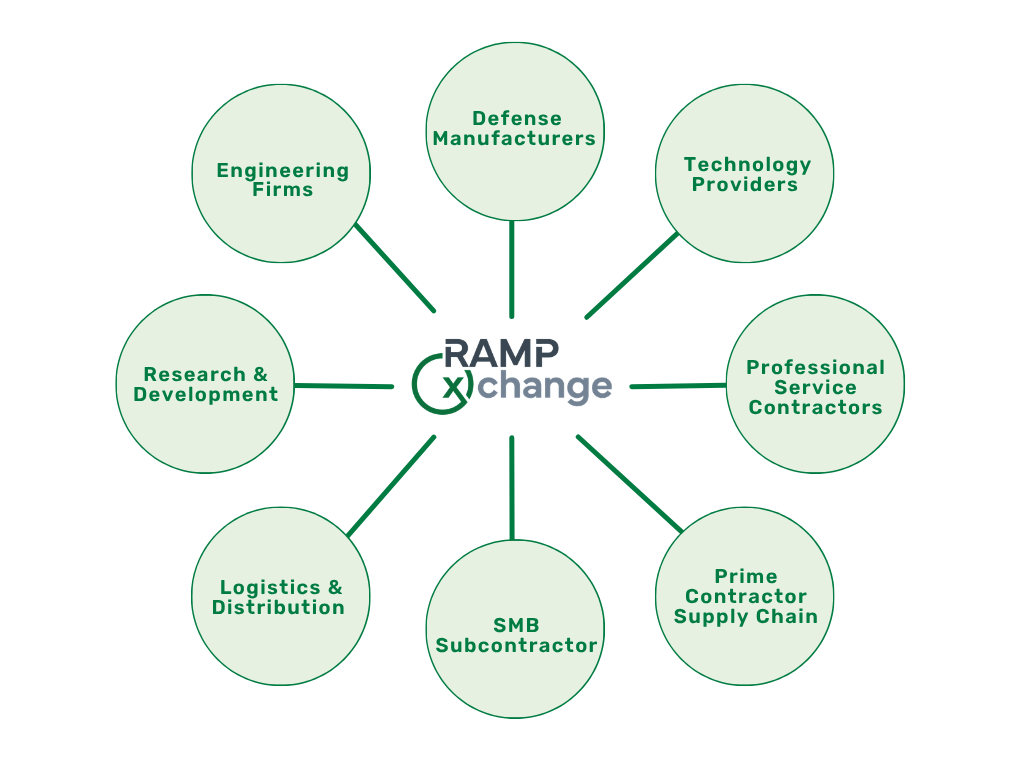
DIB Ecosystem


Supporting your CMMC compliance journey

Whether you're just beginning your cybersecurity journey or advancing an existing program, RAMPxchange helps organizations reduce the hidden costs of compliance by lowering search effort, increasing pricing visibility, and providing trusted guidance throughout the purchasing process.

Our mission is simple: remove barriers that prevent small and mid-sized businesses from participating in the Defense Industrial Base while improving the cybersecurity of the entire ecosystem.

Critical defense requirements:
  • CMMC
  • NIST SP 800-171
  • DFARS 252.204-7012
  • NIST SP 800-53
  • FedRAMP Readiness
  • Supply chain risk management

Why defense contractors choose RAMPxchange

question_chat_bubble_icon

Expert advisory support

Your organization may not have a dedicated CISO, procurement department, or compliance team. RAMPxchange advisors act as an extension of your organization, helping you understand requirements, evaluate options, and make informed cybersecurity investments.

laptop_check_icon

Transparent pricing

Compare qualified providers side-by-side and gain visibility into pricing, scope, timelines, and services before making a purchasing decision. No surprises. No unnecessary markups.

hand_holding_coin_icon

Verified Providers

Access a marketplace of vetted cybersecurity and compliance providers with credentials and experience relevant to the defense ecosystem.

shield check

Reduced compliance costs

Competition and transparency help lower costs while ensuring organizations receive services aligned with their needs and compliance objectives.

shield check

Faster path to compliance

Quickly identify the right partners, services, and support needed to satisfy CMMC, DFARS, and other cybersecurity obligations.

shield check

Simplified Procurement

Manage cybersecurity purchases, vendor communications, and project milestones in a centralized platform designed to reduce administrative burden

Stay focused on your mission. Let RAMPxchange help you with compliance.

Cybersecurity compliance shouldn't prevent innovative businesses from participating in the defense supply chain. Whether you need advisory support, implementation assistance, assessments, or long-term compliance planning, RAMPxchange can help you identify the right solution and move forward with confidence.

Explore platform features

calendar_star_icon

Project & milestone management

Our platform allows you to manage active engagements, view deliverables awaiting review and approval, and monitor upcoming deadlines in one user-friendly dashboard. Plus, grant access to other members of your team to improve visibility and expedite your procurement processes. 

file_pie_chart_icon

Finance & reporting tools

Manage all of your marketplace financial records in a single workspace. Access payables, review individual deliverable details, issue payments, and export necessary reports. Our platform consolidates all cybersecurity purchase activity and simplifies your operations. 

user_tie_icon

Guided procurement

With our expert advisor team and user-friendly platform, experience a simplified approach to procurement. Submit RFPs using one of our 35+ templates or upload your own. Host a public or private Q&A, review proposals, and select the bid that best meets your requirements, timeline, and budget. 

Frequently asked questions

What is CMMC compliance for defense contractors?

CMMC (Cybersecurity Maturity Model Certification) compliance is a requirement for many defense contractors and subcontractors that handle sensitive government information. It helps ensure organizations have the cybersecurity controls needed to protect Controlled Unclassified Information (CUI) and Federal Contract Information (FCI). Depending on the type of work performed, contractors may need to meet specific CMMC requirements to remain eligible for Department of War (DoW) contracts.

What is Controlled Unclassified Information (CUI) and Federal Contract Information (FCI)?

CUI is sensitive government information that isn't classified but still requires protection. Examples include technical data, engineering drawings, and certain contract-related information.

FCI is non-public information created or shared as part of a federal government contract. Examples include contract details, project plans, communications, and work deliverables.

What frameworks, regulations, and certifications should defense suppliers follow?

Not sure which cybersecurity and compliance requirements apply to your business? RAMPxchange's security and procurement advisors can help. We'll clarify your obligations, guide you through evolving DoW regulations, and connect you with qualified partners for CMMC, NIST 800-171, DFARS ((Defense Federal Acquisition Regulation Supplement), and other defense contracting requirements.

What is the Defense Federal Acquisition Regulation Supplement (DFARS)?

DFARS (Defense Federal Acquisition Regulation Supplement) is a set of regulations that supplements the Federal Acquisition Regulation (FAR) and governs how the Department of War (DoW) acquires products and services. DFARS includes cybersecurity requirements for defense contractors, such as protecting Controlled Unclassified Information (CUI) and reporting cyber incidents. Compliance with DFARS is often required to perform work with the DoW and its supply chain.

Through the RAMPxchange ecosystem, organizations can connect with trusted cybersecurity, compliance, and managed service providers who help assess readiness, close security gaps, and build a stronger foundation for DFARS and CMMC compliance.

When do defense contractors need to be CMMC Level 2 compliant?

Defense contractors must be CMMC compliant when the required CMMC level is included in a DoD contract or solicitation. While the DoD continues to phase CMMC requirements into contracts, organizations that handle FCI or CUI should prepare now to ensure they remain eligible for future contract opportunities.

Do small defense contractors need CMMC certification?

If a small business handles Federal Contract Information (FCI) or Controlled Unclassified Information (CUI) as part of a Department of War contract, it will likely need to meet the applicable CMMC requirements. The required level depends on the type and sensitivity of the information involved, and compliance requirements flow down to subcontractors as well as prime contractors.

How can a small business become CMMC compliant?
Small businesses can achieve CMMC compliance by assessing their current cybersecurity controls, closing security gaps, documenting required processes, and completing the appropriate assessment level for their DoD contracts. Partnering with experienced compliance providers can help simplify the journey and accelerate readiness.
How much does CMMC compliance cost for a small business?
CMMC compliance costs depend on your organization's size, current cybersecurity posture, and required compliance level. While some businesses need only minor updates, others may require additional investments in security tools, documentation, training, and remediation efforts. Through the RAMPxchange ecosystem, organizations can connect with vetted cybersecurity and compliance partners who can assess readiness, identify gaps, and develop a cost-effective path to compliance, helping reduce complexity and avoid unnecessary expenses.
How do I reduce the cost of CMMC cybersecurity compliance?

One of the most effective ways to reduce the cost of cybersecurity compliance is to start with the right guidance. RAMPxchange's security and procurement advisors help organizations identify applicable requirements, evaluate existing capabilities, and develop a cost-effective path to compliance. By connecting businesses with the right providers, technologies, and services for their specific needs, RAMPxchange helps eliminate unnecessary spending and streamline the journey to CMMC, NIST 800-171, and DFARS compliance.

How do I find a qualified CMMC provider?

Finding the right CMMC provider starts with understanding your organization's compliance requirements, cybersecurity maturity, and contract obligations. RAMPxchange's security and procurement advisors can help assess your needs, explain your compliance options, and connect you with qualified providers that align with your business goals. Rather than sorting through countless vendors on your own, RAMPxchange helps simplify the selection process by matching organizations with trusted cybersecurity and compliance partners experienced in supporting CMMC, NIST 800-171, and DFARS requirements

How do I compare cybersecurity vendors?

Comparing cybersecurity vendors can be challenging, especially when compliance requirements and technical capabilities vary widely. RAMPxchange's security and procurement advisors help organizations evaluate potential providers based on their specific business needs, compliance objectives, budget, and risk profile. By leveraging the RAMPxchange ecosystem, businesses can gain guidance on vendor selection and connect with trusted providers that align with their cybersecurity and regulatory requirements.

How can small businesses reduce cybersecurity risk in the defense supply chain?

Small businesses can reduce cybersecurity risk by implementing strong security controls, training employees, monitoring for threats, and aligning with applicable cybersecurity standards. A proactive cybersecurity strategy helps protect sensitive information, strengthen supply chain resilience, and support compliance with defense contracting requirements.

What is supplier risk management for defense contractors?
Supplier risk management is the ongoing process of reducing risk across your organization by establishing standards for suppliers, monitoring their compliance, and addressing potential security or operational issues before they impact your business.